选择您的语言


Pan-European Dynamics
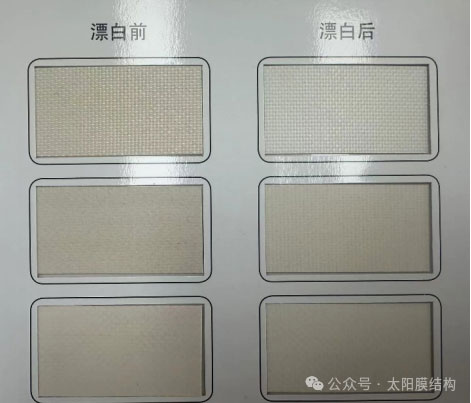
During communication and exchange with clients regarding PTFE membrane materials, the question of surface color is frequently raised. Currently, both imported and domestically produced PTFE in the industry is slightly yellowish and darker in color before leaving the factory. However, the completed PTFE projects we usually see typically have membrane materials that are pure white.
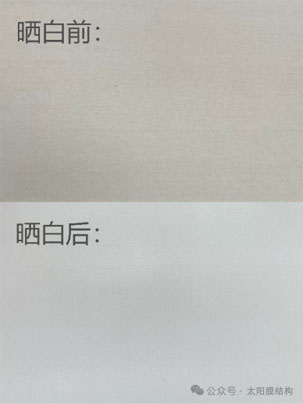
The color of the membrane material can be changed through bleaching and sun-drying.
>Membrane Bleaching
>Membrane bleaching refers to the removal of color or impurities from the surface of membrane materials through chemical or physical methods to improve the membrane's light transmittance, cleanliness, or aesthetics. It is commonly used in the processing of textiles, architectural membranes, filter membranes, packaging films, and other materials. The specific bleaching methods and chemicals used will vary depending on the type of membrane material and the application field. Common membrane bleaching methods: Physical bleaching: Includes heat treatment and mechanical wiping to remove contaminants and pigments from the membrane surface. Chemical bleaching: Uses peroxides (such as hydrogen peroxide), hypochlorites, or other bleaching agents to decompose pigments on the membrane, achieving a bleaching effect. Photobleaching: Utilizes high-energy beams such as ultraviolet light and lasers to decompose colored substances on the membrane surface.
<p style="font-size:0.22rem;color: #000000;
Membrane Material Whitening
<p ...
Ultraviolet Radiation Effect: Ultraviolet rays in sunlight have strong oxidizing power, which can decompose organic dyes or impurities on the membrane material, thus achieving a "whitening" effect.
Photochemical Reaction: When ultraviolet rays irradiate the membrane material, they trigger a series of photochemical reactions, leading to the degradation of certain colored substances or pollutants.
Common Applications:
Textile Membrane Materials: Some natural fiber membrane materials will naturally fade their surface pigments after sun exposure.
Architectural Membrane Materials: Architectural membrane materials exposed to sunlight may also experience a "whitening" effect after prolonged exposure.
Plastic Membranes: Some plastic membranes may also fade or lose color after sun exposure when used outdoors. It's important to note that the bleaching process is typically slow, and the membrane material may age or become brittle under prolonged UV exposure. Therefore, when choosing a bleaching method, the membrane material's lightfastness and the application environment should be considered comprehensively.

400-000-7823
 CapitaLand Longemont, 6088 Humin Road, Minhang District, Shanghai
微信客服
在线解答


