Global Services
Expanding our global perspective and connecting with overseas customers
Asia Europe America Africa Oceania
East Asia / Southeast Asia / South Asia / Central Asia / West Asia
Southern Europe / Western Europe / Central Europe
North America / South America / Caribbean region
South Africa / Nishihi / Central Africa
Australia
East Asia
Southeast Asia
Vietnam
Central Asia
West Asia
Southern Europe
Western Europe
Central Europe
North America
South America
Caribbean region
South Africa
Nishihi
Central Africa
Australia
EN
Consult
EN

Texhoлorng
Искусство натяжения мягкого против твердого Создавать поэзию архитектуры, которая дышит
Introduction to membrane structures
A Comprehensive Analysis of Modern Membrane Structures

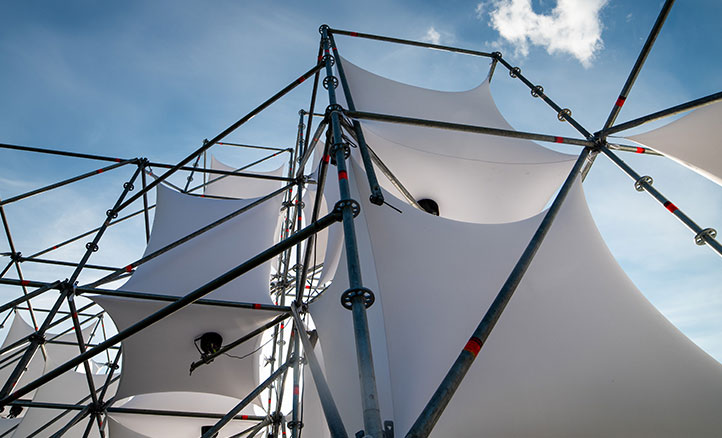
Membrane structures are lightweight architectural systems composed of tensioned membranes, such as PVC, polyester, or fiberglass. Primarily used for wide-span coverage in stadiums, exhibition centers, and swimming pools, they offer benefits like lightweight design, aesthetic appeal, and environmental sustainability. Their application continues to grow with material and technological advancements, expanding architectural possibilities. Design and construction require multidisciplinary expertise from structural engineers, architects, and material scientists to ensure safety, stability, and visual appeal.
Features/Advantages
Molecular precision creates engineering legends.
SCROLL
DOWN
  • Lightweight
    Lightweight
    The membrane structure utilizes lightweight membrane materials, which are more portable compared to traditional steel or concrete structures. This can reduce the self-weight of the building and lower construction costs.
  • Large span
    Large span
    Membrane structures can achieve large-span coverage without intermediate support columns, providing a broader space and suitable for the construction of large stadiums, convention and exhibition centers, and other venues.
  • Light transmittance
    Light transmittance
    Thin-film materials exhibit excellent light transmittance, enabling natural lighting, reducing reliance on artificial illumination, and enhancing the energy efficiency of buildings.
  • Flexible design
    Flexible design
    Membrane structures can be designed in various shapes and curves, offering strong flexibility and meeting diverse architectural forms and functional requirements.
  • Rapid construction
    Rapid construction
    Compared to traditional building structures, membrane structures have a shorter construction period, allowing for faster completion of building projects and shorter project timelines.
  • Environmental protection and sustainability
    Environmental protection and sustainability
    The materials used in membrane structures are typically recyclable, and due to their lightweight design, they can reduce environmental impact, thus exhibiting good environmental sustainability.
  • Thin Film Materials
    Thin Film Materials
    Common materials for membrane structures include polyfluoroethylene (PTFE), polyester fiber (PVC), polyethylene (PE), etc. These materials are lightweight, flexible, and have good weather resistance, making them suitable for large-span covering structures
  • Structural form
    Structural form
    In daily use, membrane structures require regular maintenance, including cleaning surface dirt, inspecting membrane materials for damage, and repairing damaged areas, in order to extend the service life of the structure.
  • Component form
    Component form
    The main components of a membrane structure include membrane materials, supporting structures (such as steel structures and cable structures), and connectors. The supporting structures serve to support and stabilize the membrane materials, while the conne
  • Design Principles
    Design Principles
    The design of membrane structures requires consideration of factors such as structural load characteristics, wind loads, rainwater drainage, and seismic performance to ensure the safety, stability, and service life of the structure.
  • Construction process
    Construction process
    The construction process of membrane structures typically involves several steps, including the prefabrication of membrane materials, the erection of supporting structures, and the tensioning and fixing of membrane materials. The construction process requ
  • Maintenance and care
    Maintenance and care
    In daily use, membrane structures require regular maintenance and care, including cleaning surface dirt, inspecting membrane materials for damage, repairing damaged areas, etc., in order to extend the service life of the structure.